
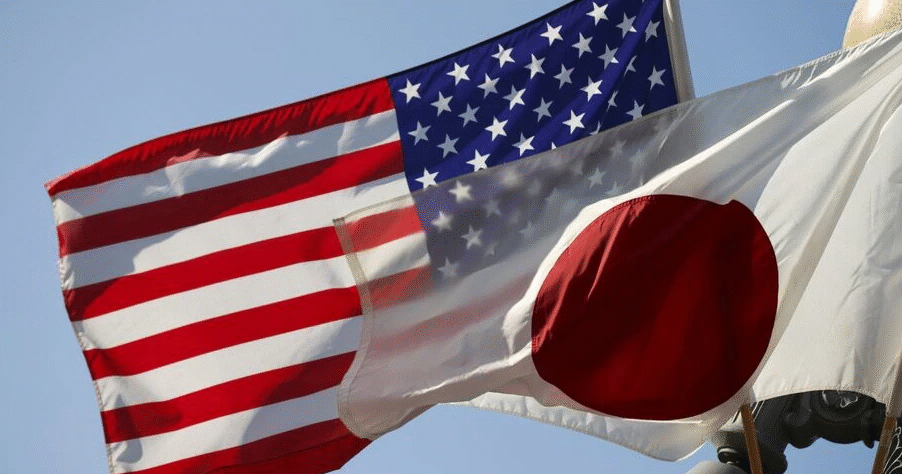
The year 2025 did not unfold around a single global shock, but rather a series of gradual yet profound shifts that redefined international power dynamics. Confidence in the United States as the uncontested global leader weakened, China grew increasingly assertive in reshaping global rules, and artificial intelligence began embedding itself into the foundations of political, economic, and strategic power.
Within this evolving global order, Nigeria emerged as a country balancing opportunity and constraint. Courted by major powers, burdened by regional leadership responsibilities, and seeking to convert diplomacy into tangible economic benefits, Nigeria adopted a multi-directional foreign policy posture. While its engagements produced measurable gains particularly in trade structural and domestic challenges continued to limit the depth of transformation.
Here are the key developments that defined Nigeria’s international relations in 2025.
Nigeria Records Its Highest Trade Surplus in Six Years
Nigeria posted its strongest trade performance since 2019, recording a total trade value of ₦113 trillion and a trade surplus of ₦19.34 trillion within the first nine months of 2025. The milestone was achieved largely through exports to European and Asian markets, with oil and natural gas accounting for nearly 91 percent of total export earnings.
Europe remained Nigeria’s largest trading partner, absorbing 43 percent of exports while contributing 34 percent of imports. Asia followed closely, accounting for 29 percent of exports and 43 percent of imports, underscoring Nigeria’s continued dependence on energy-hungry economies.
These figures strengthened Nigeria’s terms of trade (TOT) a key economic indicator measuring export prices relative to import prices. In March, Nigeria’s TOT rose to 101.37 points, signaling an improvement in trade efficiency and purchasing power.
India emerged as Nigeria’s top export destination in Q3, with exports valued at ₦2.26 trillion, followed by Spain, France, the Netherlands, and Italy. Beyond hydrocarbons, agricultural exports also gained momentum. Europe purchased ₦444.22 billion worth of Nigerian agricultural products, while Asia imported ₦246.24 billion, according to the National Bureau of Statistics.
Major non-oil exports included cocoa beans and butter, cashew nuts, sesame seeds, shrimp, palm kernel oil, and soybean derivatives.
Earlier in December, Gautier Mignot, the European Union’s envoy to Nigeria and ECOWAS, disclosed that Nigeria recorded a $10 billion trade surplus with the EU alone in 2025, representing nearly one-third of the country’s total foreign direct investment stock.
With Nigeria’s economy growing at 3.98 percent, analysts project growth could approach 5 percent in 2026, provided external conditions remain favorable.
Nigeria US Relations: Cooperation, Trade, and Diplomatic Tension
Relations between Nigeria and the United States in 2025 followed a complicated trajectory shaped by security cooperation, trade access, and migration politics.
On security, Washington remained a crucial partner, especially in counterterrorism and maritime security. However, tensions escalated over immigration and visa policies. In July, the US embassy announced reduced validity and entry limits for most non-immigrant Nigerian visas, restricting stays to three months with single entry.
While US officials cited a lack of visa reciprocity, diplomatic sources indicated Nigeria’s refusal to accept Venezuelan migrants from the US may have influenced the decision. Additional US demands reportedly included electronic visa applications for Americans and access to Nigeria’s criminal records to facilitate deportations.
Relations further deteriorated after renewed claims of religious persecution in Nigeria, prompting President Donald Trump’s administration to redesignate Nigeria as a Country of Particular Concern (CPC). This was followed by targeted visa restrictions against Nigerians accused of violating religious freedom and, later, a partial travel ban affecting the country.
Ironically, these measures came amid ongoing discussions on a strategic security framework to combat terrorism in West Africa.
On trade, Nigeria was hit with a 14 percent import tariff following Trump’s global tax policy in April. Nevertheless, Nigeria continued to benefit albeit modestly from the African Growth and Opportunity Act (AGOA). In Q3, the US ranked as Nigeria’s ninth-largest export destination, with trade valued at ₦743.63 billion.
AGOA expired on September 30, but the US Congress moved to renew the programme until 2028, offering Nigeria a potential window to expand non-oil exports.
BRICS Membership and Nigeria’s Search for New Economic Partners
In January, Brazil formally announced Nigeria’s admission as a partner country in the BRICS alliance, marking a significant shift in Nigeria’s global economic strategy.
As the ninth partner member, Nigeria joined countries including Malaysia, Kazakhstan, Thailand, and Uzbekistan in a bloc that collectively represents over 40 percent of the global economy.
Foreign Affairs Minister Yusuf Tuggar said Nigeria’s inclusion reflected a strategic push to diversify economic partnerships beyond traditional Western alliances, especially given the country’s rapidly growing population now over 230 million and projected to reach 401 million by 2050.
Nigeria’s longstanding commitment to non-alignment and strategic autonomy has enabled it to pursue BRICS membership while also expressing interest in the G20, reflecting a pragmatic, interest-driven foreign policy.
Intra-African Trade Sees Significant Growth
Nigeria’s trade with African nations rose sharply in 2025. The Nigeria Customs Service reported a 14 percent increase in intra-African trade during the first half of the year, amounting to ₦4.82 trillion.
The gains were largely attributed to Nigeria’s progress under the African Continental Free Trade Area (AfCFTA). Key reforms included tariff concessions and the launch of a dedicated air cargo corridor to East Africa, reducing export costs by nearly 75 percent.
Within West Africa, Ivory Coast emerged as Nigeria’s largest regional market, followed by Ghana, Togo, Senegal, and Niger.
Diplomatic Missteps with Japan and Burkina Faso
Despite active diplomacy, Nigeria faced notable setbacks.
At the Tokyo International Conference on African Development (TICAD), Nigeria drew criticism after its exhibition booth appeared understaffed. While officials dismissed the controversy, matters worsened when a Nigerian government statement claimed Japan would create a special visa category for young Nigerian professionals.
Japanese authorities denied the claim, and public backlash in Japan eventually led to the cancellation of the programme, turning a minor miscommunication into a diplomatic embarrassment.
Regionally, tensions flared with Burkina Faso after Nigerian Air Force personnel were detained following an emergency landing. The situation was resolved only after high-level diplomatic intervention by Nigeria’s foreign minister.
The Bigger Picture
Nigeria’s international engagements in 2025 reinforced its global relevance but exposed persistent structural weaknesses. While trade surpluses and alliances generated optimism, they remained heavily dependent on energy exports, currency depreciation, and external market conditions.
Delayed ambassadorial appointments and slow implementation of governance reforms further weakened diplomatic effectiveness. An EU election observation mission noted that only one out of 23 recommended reforms had been fully implemented by late 2025.
Until domestic reforms power supply, manufacturing, regulatory stability translate into competitiveness, Nigeria’s diplomacy risks managing decline rather than driving sustainable growth.
A diversified export base and resilient economy remain critical if Nigeria is to convert international engagement into lasting national transformation.